
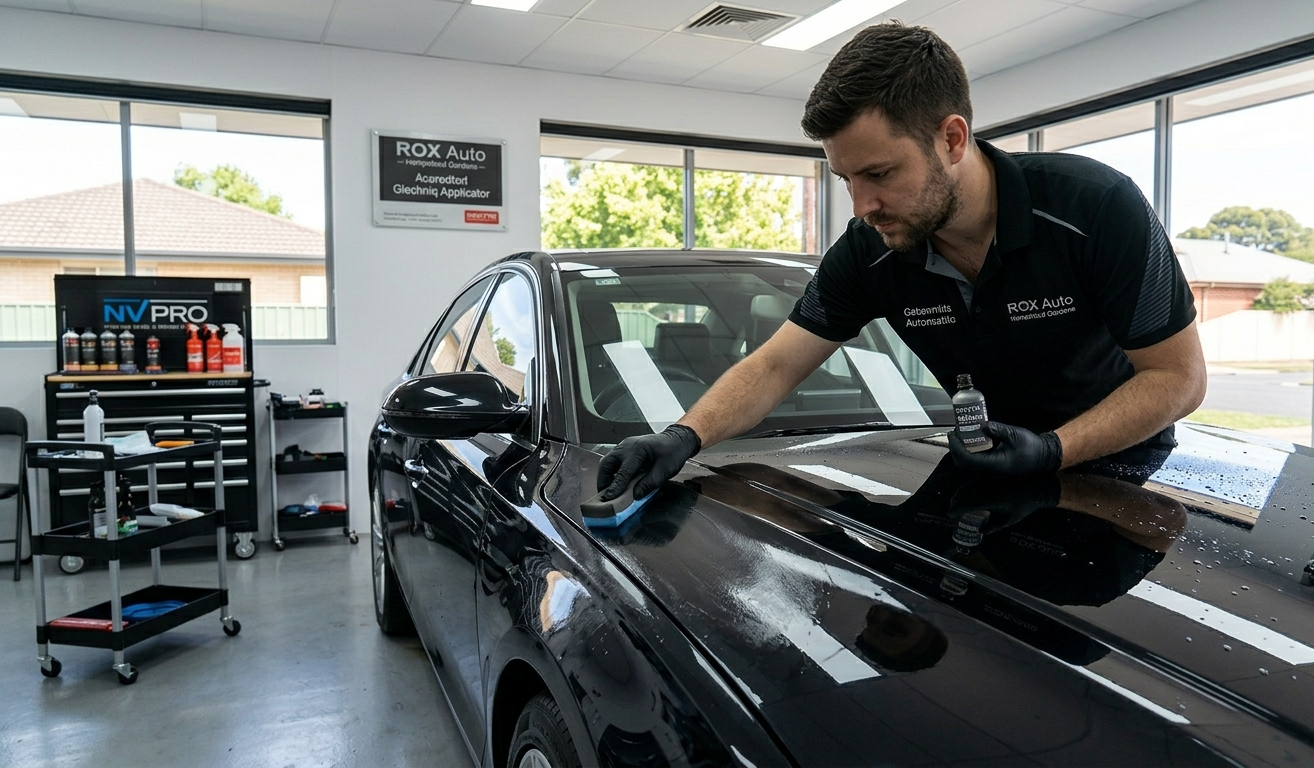
Ceramic coating gets talked about a lot in the car care world, and not all of it is accurate. Some of it oversells what the product does. Some of it undersells it. This guide covers what a ceramic coating actually delivers for a car driven and parked in Hampstead Gardens, how the process works, and what you should realistically expect to pay.
What Ceramic Coating Is and What It Is Not
A ceramic coating is a liquid polymer that is applied to the painted surfaces of a vehicle. Once it cures, it forms a chemical bond with the clear coat that cannot be removed by washing, rain, or normal road use. It sits on top of the paint as a thin, transparent, extremely hard layer.
What it does: it repels water and grime with a strong hydrophobic effect, blocks UV radiation from reaching the paint, resists chemical staining from bird droppings, tree sap, and acidic fallout, and adds a noticeable depth and gloss to the finish.
What it does not do: it does not make the car immune to rock chips, deep scratches, or accident damage. It is not a substitute for paint protection film if your concern is stone chips on the bonnet and front bumper. And it is not a one-time fix that removes the need to ever wash the car again, though it does make washing significantly faster and easier because grime does not stick to the surface the same way it does on bare or waxed paint.
Why Adelaide’s Climate Makes Ceramic Coating a Smart Investment
Hampstead Gardens sits in one of the most UV-intense urban environments in the world. Adelaide consistently records higher UV readings than comparable cities in Europe and North America, and the combination of intense sun, heat, and particulate pollution from dry northerly winds creates an environment that degrades unprotected paint relatively quickly.
Paint oxidation, where the colour fades and the surface takes on a dull, chalky appearance, is almost entirely caused by UV exposure. A ceramic coating with proper UV-blocking properties significantly slows that process. Vehicles that are coated and properly maintained will retain their paint gloss years longer than vehicles that are not.
This is not purely an aesthetic consideration. A car with well-maintained paint holds its resale value better than one with faded or oxidised paint, and in Adelaide’s used car market, presentation matters.
The Ceramic Coating Process at Rox Auto
The quality of a ceramic coating job is determined largely by what happens before the coating is applied. Applying a coating over contaminated, oxidised, or swirl-marked paint locks that paint condition in permanently. This is why preparation is as important as the coating itself.
Stage one: decontamination
Before any polishing or coating work begins, the car is washed thoroughly and then decontaminated using an iron remover, which dissolves embedded metallic particles from brake dust and road grime, followed by a clay bar treatment that pulls bonded surface contaminants from the paint. This step is included in all of our packages.
Stage two: paint correction
Depending on which package you choose, this step involves either a light single-stage polish to address light swirls, or a full multi-stage correction that removes deeper marring, oxidation, and surface imperfections. The Rox Entry Coat includes a light polish. The Rox Standard uses a two-stage correction. The Rox Elite uses a multi-stage approach that brings the paint as close to factory new as possible before the coating goes on.
If you have a car with visible swirls under bright light, or older paint with some oxidation, we recommend at minimum the Standard package to get the most out of the ceramic protection.
Stage three: coating application
The coating is applied panel by panel in a controlled environment. We use Gtechniq and NV PRO professional-grade coatings exclusively. These are the same products used by authorised detailers for prestige brands. The coating is worked across the surface and then levelled before it begins to flash, which is the point at which it starts to cure.
On Elite packages, a second layer of coating is applied after the first has cured, which increases the total thickness of the protective layer and extends the warranty period.
Stage four: curing
The coating needs time to cure properly. The initial surface cure takes 24 to 48 hours. During this window, the car should be kept dry. Full molecular-level cure takes approximately two weeks. We will provide you with a detailed aftercare sheet when you collect the vehicle.
Which Package Is Right for Your Car
For a newer vehicle with clean paint, the Entry Coat is a solid starting point. It provides genuine protection and the hydrophobic effect will be noticeable from the first wash.
For a car that is two to five years old and has accumulated some light surface swirling from washing, the Standard package addresses the paint condition and gives you three to five years of protection.
For a prestige vehicle, a car you intend to keep long-term, or a brand-new car you want to protect from day one, the Elite package is the most comprehensive option we offer. The two-layer system and seven-year warranty make it the right choice when the vehicle and the outcome both matter.
Book in Hampstead Gardens
Rox Auto is based in Hampstead Gardens and services the surrounding area including Gilles Plains, Klemzig, Holden Hill, Greenacres, and beyond. Workshop appointments and mobile bookings are both available.
Call or text 0460 347 665, email roxautosolutions@gmail.com, or visit roxauto.com.au to book. Afterpay is available across all packages.